

How to Create Sermon Outlines That Won't Bore Your Church - Part One
Creating sermon outlines that won’t bore your church requires some creativity. Before you infuse your words with whimsy, do the hard work of conjuring an outline that clearly and accurately covers the passage you’re preaching. We'll cover the steps of how to create your sermon outlines based on the deep study you've already done. Additionally, in Part Two, we'll see how to craft exciting sermon outlines using the work from Part One.
Writing good sermon outlines requires the steps we’ve already covered in this series of 10 steps. In our previous post, we looked at the difference between the inductive sermon format and the deductive sermon format. Now, we’ll apply that to a Biblical sermon outline that accurately reflects the text and effectively communicates the Big Idea or the sermon’s main idea.
Using Proverbs 3:5-6 to Create Interesting Sermon Outlines
Assuming a preacher did the careful study covered in the rest of this series on sermon prep, then we look at this part of that process. It includes taking your Big Idea and turning it into a question that the text answers. We’ve used Proverbs 3:5-6 as our text. So, let’s take another look at it.
5- Trust in the LORD with all your heart,
And lean not on your own understanding;
6- In all your ways acknowledge Him,
And He shall direct your paths. (Proverbs 3:5–6, NKJV)
In the last post, we came up with a “textual idea” as follows:
If you trust God in everything, then he will guide you through life’s obstacles.
Once you have stated the Big Idea as an “Exegetical Idea”, next create your outline. But what is the Exegetical Idea?
How to Create the Exegetical Idea
In preaching, we develop a Big Idea, which is the key concept stated in a memorable and engaging way that listeners can take away from the sermon. More on that later. First, we need to develop an “Exegetical Idea” that states the text, including historical details, its context, and other supporting information. The Textual Idea of Proverbs 3:5-6 might look like this:
The Proverb intended for young men who will learn to live according to God’s wisdom states that if we put our trust in God in all things, then God will guide us through all of life’s obstacles.
The context of the passage indicates that this Proverb focuses on “My son” (verse 1) and serves as a philosophical foundation for a life of godly wisdom. Textual ideas will help us in our preparation, but won’t make it into the final sermon outlines. A good textual idea includes...
The Big Idea of a passage, which is made up of the subject and complement as defined by Haddon Robinson in his book Biblical Preaching.
The context of the passage, if applicable.
The writer and the recipients of a passage.
Any settings like date and situation.
In our post about discovering the Big Idea, we explore how to identify that statement. We skipped over the Exegetical Idea in that step. However, we should not overlook it in our sermon preparation. It helps us keep our message connected to the text we're expounding.

Transforming the Exegetical Idea Into the Homiletical Idea
Once you’ve created a decent Exegetical Idea that includes all of the above elements, then you can strip away much of it to make a Homiletical Idea. The Homiletical Idea that might end up in our sermon and communicate the Big Idea of the passage.
Take your Exegetical Idea and strip away the things you added to create your Homiletical Idea.
Why bother to include these other items and write an Exegetical Idea? You want ot keep in your mind the context, the purpose, the author, and the audience of the original passage. This helps you, as you then take the message you picked up from the world of the Bible and apply it to the world of your present.
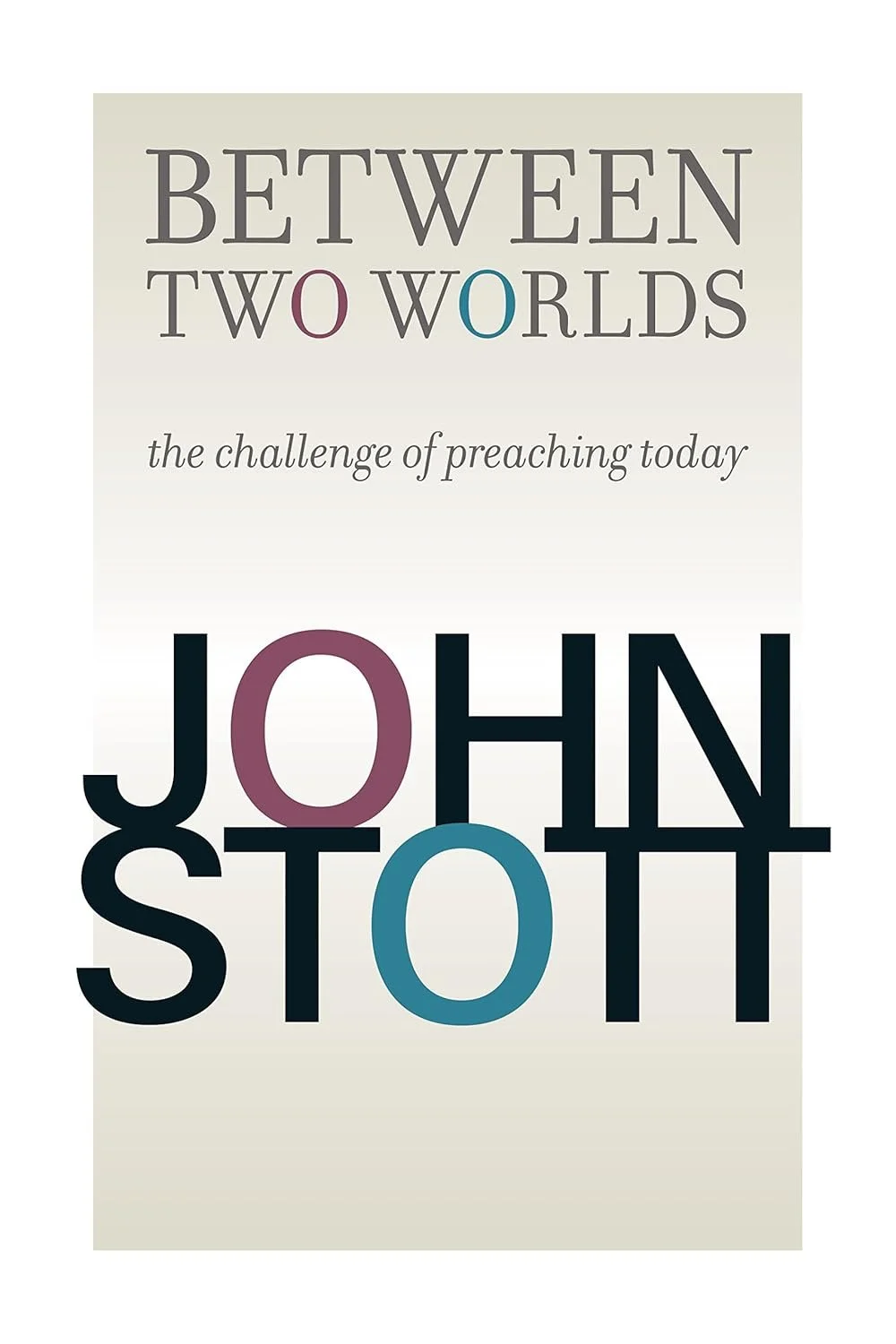
John Stott famously wrote a book on preaching entitled Between Two Worlds, in which he suggests that preachers take the message from the world of the Bible and translate it into the present context. The Exegetical Idea focuses on the world of the Bible, while the Homiletical Idea focuses on the present context.
In our post on "Discovering the Big Idea," we suggested the following as a subject and complement to make up the Big Idea or Homiletical Idea.
Subject: How do believers trust in the Lord?
Compliment: The Lord’s believers trust Him with all their hearts by relying on his understanding and direction.
What's wrong with our subject? This subject focuses on the actions of people instead of on the work of God. That's appropriate if you develop the sermon with a focus on God's work. However, we could rewrite it as follows:
Subject: How does God inspire trust in believers?
Complement: The Lord inspires believers to trust Him with all their hearts by proving Himself reliable, understanding, and guiding us through life.
Transforming a Useful Big Idea Into an Exciting Idea
Now we want to take our basic and a little boring Homiletical Idea and turn it into a compelling Big Idea. To do this, read your passage, your study notes, and both the Exegetical and Homiletical Ideas. Do you see any interesting natural analogies or illustrations in the text, the background of the text, the word studies, or any other results of your previous work?
With Proverbs 3:5-6, we see a few possibilities.
Winding versus straight roads or paths.
Rough versus flat roads or paths.
Trust.
Leaning or putting weight on.
Understanding versus confusion.
Acknowledging someone or something.
Giving due respect to someone.
Re-read the passage and pray about the possibilities listed above. What best fits with the passage? What communicates best with my audience? What seems most exciting and interesting to my audience?
I may use multiple natural analogies or sermon illustrations from the list above. However, one can structure a sermon more effectively to make it more engaging as a whole.
Focus On One Natural Analogy
A natural analogy is a real-world example that conveys a point about your text. Our natural analogy is based on the idea of straightening winding or rough roads.
Let's take the idea of winding or rough roads as our main illustration. How can you state the Big Idea in a way that uses that concept to communicate the Big Idea? Here's a suggestion:

God fixes our broken roads - the subject of Proverbs 3:5-6.
How does God fix our broken roads?
The action of the Lord comes at the end of verse six. He will "direct" or "make straight" our paths?
In Logos, I right-clicked on the word "direct" from the NKJV and chose to run a Bible Word Study during my research phase. The word study revealed that the word appears in various forms throughout the Old Testament. All of them give us the notion that God will make your path straight, level, even, or smooth. Other senses also appear in the word study, but those seem to fit this passage.
The same word appears in Isaiah 40:3, which prophesies that John the Baptist will come and prepare the way for Jesus. The term "Make straight" is the same Hebrew root word.
The voice of one crying in the wilderness:
“Prepare the way of the LORD;
Make straight in the desert
A highway for our God.
(Isaiah 40:3, NKJV)
How to Transform the Subject Into an Interesting Big Idea
We get a concept like this: God fixes broken roads for people who trust Him. Now use the investigative questions we used in the Asking Interpretive Questions step of our sermon prep. There, we used the "Who, what, where, why, and how" approach to identify questions that needed to be answered as we studied our text. As a result, our subject becomes an interrogative statement, guiding us to find the complement or complements in the text.
Brainstorm questions and don't judge which one fits best until you finish trying to create questions with each word.
Who does God fix broken roads for?
What does God do to fix broken roads for people who trust Him?
Where does God fix broken roads for those who trust Him?
Why does God fix broken roads for those who trust Him?
How does God fix broken roads for those who trust Him?
We will take these interrogatives and pick the best one. Then we'll find the answers in the text to craft exciting sermon outlines in our next post, Part Two.